
Watching Gurinder Chadha’s movie, Blinded by the Lights, you’d at once be forgiven for believing the director had been conscripted on behalf of the British East India Company. I’m not much of a conspiracy theorist, but after watching her film I felt compelled to visit the internet to see whether the once imperial company had been secretly brought back to life. Needless to say, it had not.
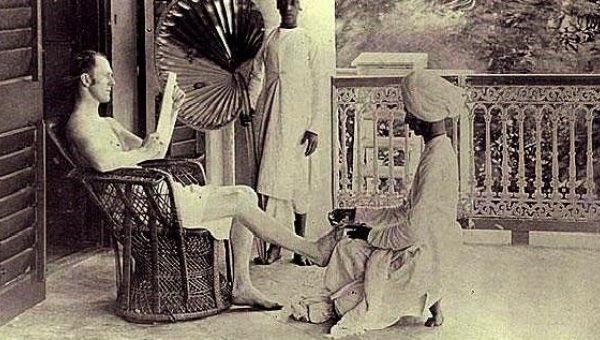
It takes quite a bit in this day and age to actively promote such a copious degree of backwardness, a backwardness that history has taught us to move beyond, yet Chadha manages to do just this in the most obvious and self-deprecating of ways. If a movie could bow any lower to the idea of British white supremacy, Blinded by the Lights would be the equivalent of a teenaged Apu subserviently licking clean the boots of his white master.
The film is set in 1980’s Luton and follows sixteen-year-old Javed, a young British Pakistani kid outcast in a town and family he feels little connection to. This is a classic story of a young man’s search for identity, purpose and belonging – and for Javed, this arrives only upon his discovery of Bruce Springsteen.
Based on a true story, the movie has its moments of intrigue and revelation (his father’s financial struggle and the subsequent toll it takes on the family is particularly touching), only these moments are often steeped in corny displays of sentimentality and obvious caricature. Javed is obviously repressed by his Muslim culture and family, obviously subject to overt racism, and obviously a copious virgin. It comes as no surprise to us that he wants to take himself out of this world where he will inevitably, and obviously, need to be saved.
It’s at this juncture that the most obvious occurs: the entrance of benevolent white people.
Watching this movie, you’d be pushed to find another with as many well-intentioned white people as this one. White people who either don’t see Javed’s race, or who wish to defend and/or celebrate it. There is the good white teacher championing his talent as a writer, his good white liberal girlfriend, albeit with the laughably ignorant parents (only ignorant, mind you, never racist), the good ex-army veteran neighbour who wants nothing more than to see him succeed, and his best mate next door who of course only has his best interests at heart.

Needless to say, the presentation of his Pakistani family is somewhat different, yet nonetheless stereotypical. Most visible is the suppressive and dominating Pakistani father who, despite having good intentions, deploys it in all the wrong ways (he is of course taught about tolerance in the end – by white people). Then we have the demure and overburdened mother, caring only for the happiness of her family but powerless to exercise her good will above the overbearing husband. There is the young sister who is forced to sneak behind her parents back to enjoy herself, and of course in our lead character, the repressed son who wishes nothing more than to leave all of this backwardness behind.
In the final scene of the movie its most triumphant symbol of white hegemony is actualised. Leaving to go to university, Javed and his father get into the car and begin to drive away, but not before flinging his father’s Arabic tape from the cassette player and replacing it with our main man Bruce; the two of them chuckling to one another somewhat devilishly.
Only, if you listen carefully it’s not only Springsteen you can hear playing, there’s another tune detectable… attune your ears ever so slightly and you’ll be able to hear the good ol’ horns of ‘Rule Britannia’ speaking to you with all Her imperial majesty…
My contention against such representation lies not in the fact that such characters exist, for they certainly do (this movie was, after all, based on a true story). It’s the obsequious manner in which it attempts (and succeeds) to bow down to white British hegemony that I found truly appalling. And because we’ve seen these demeaning and pathetic narratives play out over time, I’m forced to ask why at this point the choice would be to exacerbate it even further?
Considering the ways in which this movie champions British value above others, can Blinded by the Lights be seen as a modern artefact in the collection of British colonial plunder? I’d certainly say so. And so much so that Liz ought to put it on display with all her other shiny ‘gifts’ ‘obtained’ from the region. The only redeeming thing about this happening is that we’d never get to watch this movie again. And for that reason alone, may God Save the Queen.
Margin Page.
Margins Page is a play on its very words. Stories of black people in Britain, both past and present, have often been relegated to the margins of the British canon. This platform attempts to reconfigure this position, serving as a page to help develop, curate and promote black British literature.
Got a point of view or a story to share? Get involved by clicking here

 marginspage.com