
There’s a secret among black and ethnic minority people in this country that becomes pronounced when in the company of a white majority. It’s that change of tone you adopt with the security guard because his mother’s from Trelawny too. It’s that head nod you know to give every black boy from Lewisham to Soweto. It’s what you saying bro.
I think we’ve all been there before…abroad, recognising that one individual in the foreign crowd who shares your race or ethnicity. And the preceding feeling of wanting to obviously acknowledge them, but not wanting to make it too obvious.
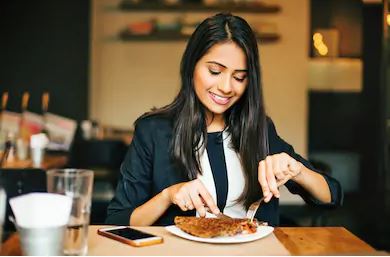
Why is it that these moments feel like secrets? On the train I instinctively turn down my Fetty Wap, subconsciously in fear of people judging me for the rachet shit I listen to. Every Asian girl I’ve worked with suffers some form of anxiety about warming up mum’s food, lest they get funny looks from the ‘non-ethnic’ people in the office.
You’d think we were living in some kind of future slave plantation where, in order to survive, there are things we can’t let massa see or hear (or smell, in the case of Ayesha’s biryani).
It’s these small elements of culture that make us feel, despite our birth and documentation, that we are not fully British and perhaps never will be. That there is consistently a side of us sheltered and self-suppressed. in contrast to white British culture.
Remember that pic taken a few years back showing the seeming racial divide between the England U21 football team? Though the Daily Mail dubbed this seeming phenomenon ‘unconscious segregation’, what is evident to me is that these boys shared something distinctly racial.
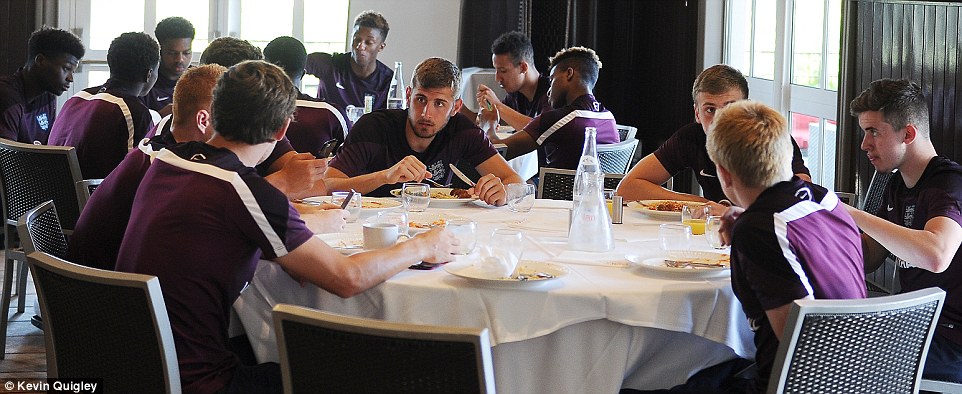
Though it may not be popular to speak it, nor wholly in line with our diversity quotient, for many ethnic minority people, finding a familiar space to express your race and ethnicity is incredibly important. To find or gravitate towards spaces where you do not feel like, or are in fact not the minority (and subject to all the things this matter of fact brings) brings a sense of security and a degree of freedom.
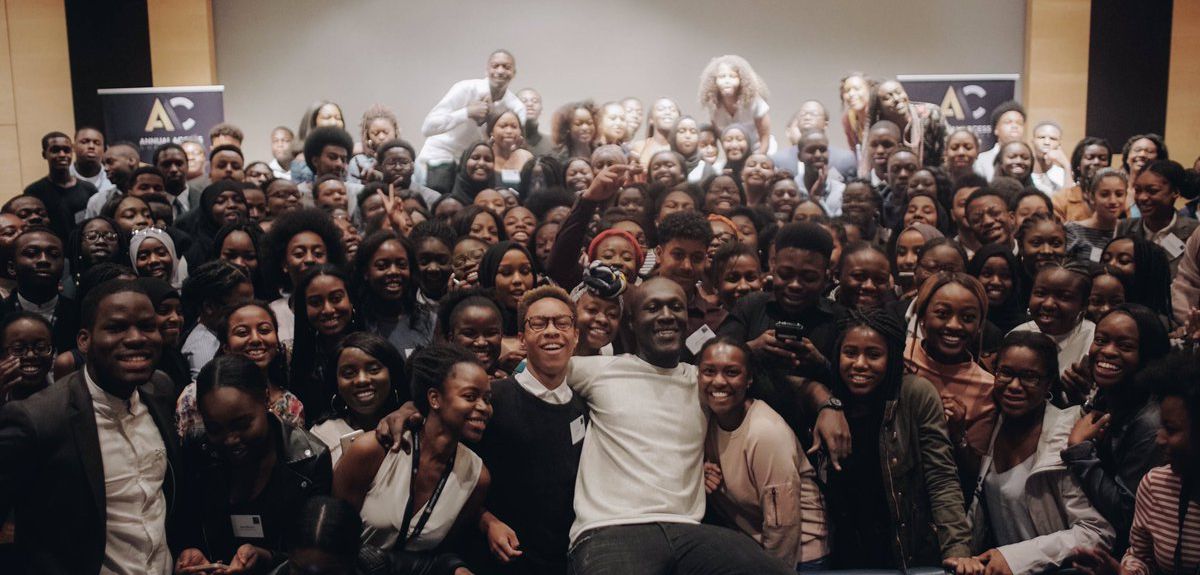
I currently work in perhaps the most multicultural university in the UK, with a student body made up of over 70% ‘ethnic minority’ people. Yet, for all this diversity, why is it that, on a superficially observed level, kin still stick with kin? The black kids hanging with the black kids, East Asians East Asians, and South Asians the same?
I mention this not to indicate some kind of bigoted segregation, nor to undermine the precepts of diversity, but rather to highlight that our promotion of a mixed cultural patina does not appear wholly accurate. And though it may pain our multi-cultural/diverse ideals, it is self-evident that part of the reasons people come together are racial.
If anyone is exempt from this seeming phenomenon it is of course white people. They are the only racial group who I’ve heard exclaim not to ‘see race’, and though I’ve always felt antagonistic towards this position, I’m now ready to accept it. On no occasion is their race ever called upon, and so I have to imagine that for the most part they have no need to see it.
But what about we who do? Who feel the need to express ourselves in whispers and half truths. Our fear, I feel, is of being seen as racialised or ethnic, and the consequences this may bear. Yet if we don’t shed this fear we do ourselves an incredible injustice, in that the true diversity we seek to attain becomes wrapped in a secret.
Margin Page
Margins Page is a play on its very words. Stories of black people in Britain, both past and present, have often been relegated to the margins of the British canon. This platform attempts to reconfigure this position, serving as a page to help develop, curate and promote black British literature.
Got a point of view or a story to share? Get involved by clicking here

 marginspage.com